
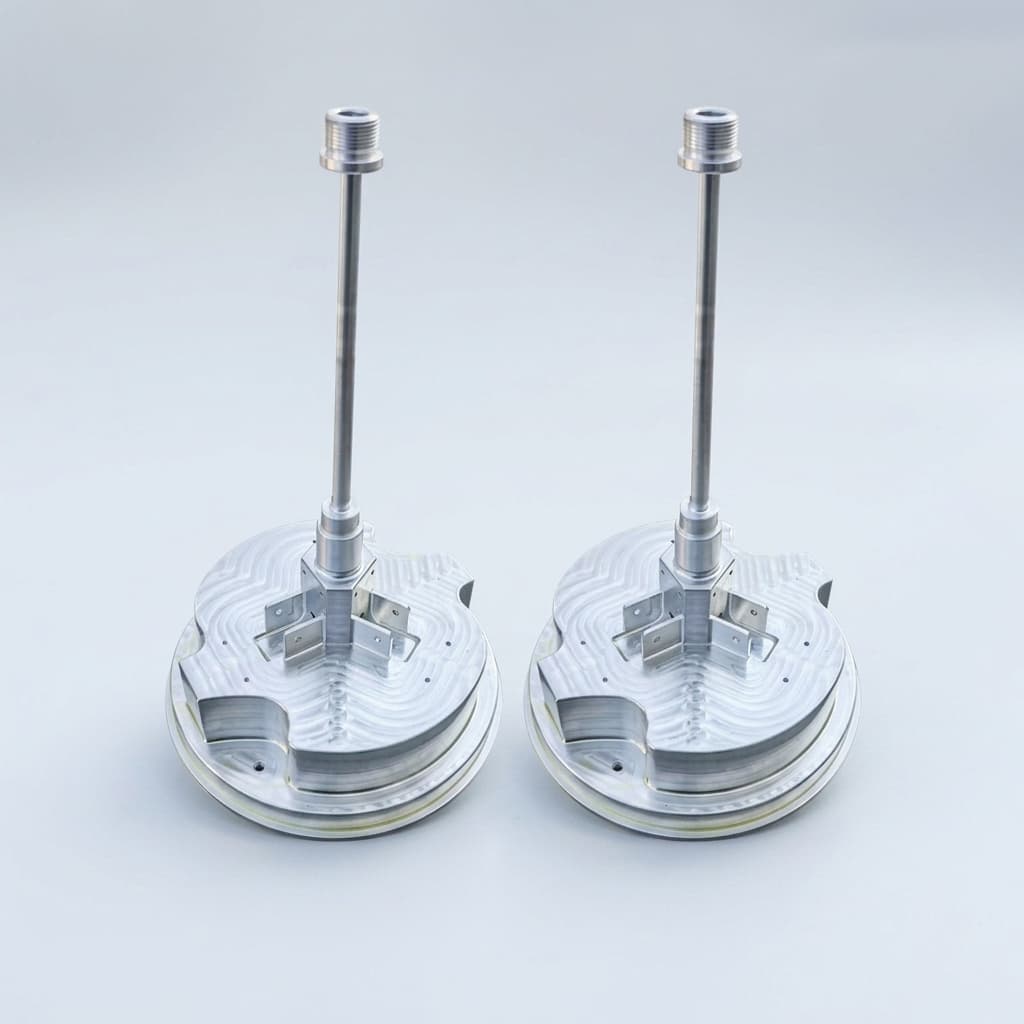
Custom Humanoid Actuator BOM Integration and Sourcing Guide
How funded robotics teams can coordinate motors, reducers, encoders, drivers, bearings, housings, harnesses, validation evidence, and export logistics through one custom actuator ODM workflow.
A custom humanoid actuator is not a shopping list. It is a controlled BOM integration problem. The motor, reducer, encoder, driver, bearing stack, housing, brake, harness, firmware boundary, inspection plan, and shipment package all affect each other. If those items are sourced through disconnected vendors, the buyer may save a little on one line item and lose weeks in clarification, mismatch, rework, and sample rebuilds.
The planning logic for customhumanoidactuator.com is a unified sourcing ecosystem for serious custom actuator programs. The practical website version is a single engineering intake and ODM coordination path: the buyer sends CAD, drawings, target performance, and sourcing constraints; the supplier returns DFM questions, component risk, evidence needs, and a path from prototype to pilot.
Use this guide with the actuator BOM and supply chain integration OEM page, the drawing-to-production ODM workflow, and the custom humanoid actuator modules product path.
Scope note (published July 24, 2026): This guide describes a buyer-side RFQ and supplier coordination model. It should not be read as a public instant-quote marketplace, guaranteed 24-hour prototype promise, or automatic AI quoting system unless those capabilities are explicitly implemented in a project workflow.
1. Why Separate Supplier Sprawl Breaks Actuator Programs
Humanoid actuator sourcing often looks simple at the component level. A reducer supplier can quote torque. A motor supplier can quote Kv and winding. A PCBA supplier can quote a driver. A CNC shop can quote the housing. The failure appears when those isolated assumptions are assembled into one joint.
| Component area | Split-supplier risk | Integration owner must define |
|---|---|---|
| Frameless motor | Stator OD, winding heat path, rotor fixation, and cable exit do not match the housing or reducer package | Motor envelope, winding target, mounting datum, thermal contact, lead exit, and magnet retention assumptions |
| Reducer | Backlash, shock tolerance, lubrication, and output bearing load are quoted without the final joint fixture | Reducer architecture, ratio, backlash test method, shock event, bearing support, and output interface |
| Encoder | Motor-side feedback hides reducer lost motion, or magnetic target alignment is not controlled in assembly | Encoder topology, calibration responsibility, magnet location, output-side feedback need, and firmware boundary |
| Driver | Current limit, heat path, connector choice, and protocol are chosen without knowing the real duty cycle | Voltage, peak-current duration, continuous current, protocol, thermal path, FCT scope, and firmware revision |
| Bearings and housing | Bearing seats meet isolated dimensions but fail preload, concentricity, or runout after assembly | Datum scheme, CTQ dimensions, CMM scope, fit class, preload-sensitive features, and assembly sequence |
| Harness and connectors | Cable bend radius, strain relief, pinout, and shielding conflict with hollow-shaft routing or service access | Cable path, bend radius, connector family, pinout, shielding, strain relief, and export replacement strategy |
| Validation and logistics | Prototype works, but evidence, packaging, customs documents, or pilot traceability arrive too late | Gate evidence, serial mapping, packaging control, export docs, spare policy, and issue response owner |
The risk is not only technical. It is managerial. Each disconnected supplier adds another revision state, another email thread, another assumption about acceptance criteria, and another reason for the sample schedule to drift.
2. Use One Engineering Intake Window
The buyer does not need to over-specify every component before contacting a supplier. They do need one controlled intake package that lets the supplier identify contradictions early.
A useful actuator intake package includes:
- Joint map and robot location, such as hip, knee, ankle, shoulder, elbow, wrist, neck, or finger.
- CAD envelope, drawing revision, output interface, bearing boundary, and cable path.
- Peak torque, continuous torque, target speed, duty cycle, ambient temperature, and sealed or ventilated housing condition.
- Preferred reducer architecture, ratio range, backlash limit, and test condition.
- Voltage, protocol, encoder topology, brake requirement, driver location, and firmware boundary.
- Known approved components, restricted suppliers, target cost range, lead-time limit, prototype quantity, pilot forecast, and destination country.
- Evidence requirements, such as FAI, CMM, backlash report, thermal-rise report, burn-in record, FCT record, serial traceability, and 8D response expectation.
This is why the custom humanoid actuator ODM RFQ guide exists. The goal is not to create more paperwork. The goal is to prevent the first supplier reply from becoming a provisional quote built on hidden assumptions.
3. Define BOM Ownership Before Price Comparison
Price comparison is dangerous when suppliers are not quoting the same controlled BOM. Before comparing two quotes, define who owns each layer.
| BOM layer | Buyer-owned decision | Supplier-owned review |
|---|---|---|
| Architecture | QDD, harmonic, cycloidal, planetary, linear, or hybrid stack preference | Feasibility, trade-offs, sourcing risk, manufacturability, and validation implications |
| Critical components | Preferred brands, approved equivalents, restricted suppliers, and export constraints | Alternative options, lead time, MOQ, NRE, qualification risk, and substitution notes |
| Custom parts | CAD model, drawing revision, material, surface treatment, and CTQ features | DFM, tolerance stack, fixture plan, CMM scope, and machining risk |
| Electronics | Voltage, protocol, current limit, driver location, connector family, firmware boundary | Thermal path, PCBA inspection plan, FCT scope, calibration flow, and component availability |
| Evidence | Acceptance criteria, required reports, pilot release gate, and traceability depth | Test method, sample evidence, fixture capability, serial mapping, and corrective-action path |
If BOM ownership is unclear, the buyer may approve a sample that cannot be repeated. A supplier may also make a silent substitution that fixes lead time but changes heat, friction, noise, firmware behavior, or certification risk. That is why substitution rules belong in the RFQ, not after the pilot PO.
4. Freeze the BOM in Stages
A unified sourcing workflow does not mean freezing everything on day one. It means knowing which decisions are open, which are locked, and which evidence is needed before the next gate.
| Build gate | What to freeze | What can stay open | Evidence to request |
|---|---|---|---|
| Concept review | Joint function, envelope target, torque-speed target, voltage class, and rough architecture | Exact supplier models, housing detail, driver location, connector family, and final test limits | Feasibility notes, risk list, preliminary BOM split, and DFM questions |
| EVT prototype | Drawing revision, interface geometry, reducer path, motor envelope, and initial driver assumption | Final component brands, harness detail, burn-in duration, and production fixture design | FAI scope, basic torque-speed data, initial thermal and backlash checks, and open issue log |
| DVT build | CTQ dimensions, acceptance limits, driver and encoder architecture, harness path, and validation method | Second-source options, packaging refinements, yield target, and production inspection sampling | Thermal-rise report, backlash method, load-cycle result, FCT or calibration record, and CMM scope |
| Pilot build | BOM revision, supplier responsibility, assembly process, outgoing test limits, and packaging rule | Annual forecast range and approved second-source trigger | Serial records, yield trend, nonconformance log, traceability file, and pilot release checklist |
| Production | Change-control rule, approved supplier list, inspection cadence, spares policy, and logistics plan | Continuous improvement items that do not alter fit, function, or acceptance limits | Lot records, Cpk review where meaningful, corrective-action ownership, and repeat order review |
This gate structure connects sourcing to engineering reality. A custom actuator program should move from unknowns to controlled evidence, not from attractive quotes to surprise rebuilds.
5. Align Custom Manufacturing and Standard Parts
The strongest ODM value appears when custom parts and purchased components are coordinated together. A CNC housing cannot be judged separately from the bearing. A reducer cannot be judged separately from the output flange. A driver cannot be judged separately from the heat path. A harness cannot be judged separately from the hollow shaft.
For a compact humanoid actuator, review these integration pairs early:
- Motor OD, stator contact surface, housing wall thickness, and thermal interface.
- Reducer OD, bearing seat, output flange, backlash method, and lubrication access.
- Encoder location, magnetic target, assembly tolerance, calibration fixture, and firmware data storage.
- Driver PCB, current limit, thermal-via strategy, connector placement, and housing heat path.
- Brake holding torque, power loss behavior, release time, and mechanical fallback requirement.
- Hollow-shaft cable path, bend radius, service access, strain relief, and EMI control.
- Packaging insert, protected datum surfaces, corrosion control, spare harnesses, and customs documentation.
If the joint uses a lower-body reducer-heavy architecture, pair this guide with the backlash testing RFQ guide. If the joint is compact, high-current, or sealed, pair it with the thermal derating guide.
6. Control Substitutions Before They Happen
Substitution is not automatically bad. A second source can reduce lead-time risk and cost. The problem is uncontrolled substitution: a different bearing clearance, encoder IC, MOSFET package, connector plating, lubricant, or surface treatment can change actuator behavior even when the part looks equivalent on paper.
Add these rules to the sourcing section of the RFQ:
- Which parts are buyer-approved only and cannot be changed without written approval.
- Which parts may use supplier-approved equivalents after DFM review.
- Which substitutions require new thermal, backlash, FCT, or CMM evidence.
- Which substitutions can be accepted for prototype only, but not pilot.
- Which parts require date code, lot, or serial traceability.
- Which component changes trigger a new sample, revised quote, or pilot release review.
For overseas teams, this is especially important because the buyer may not physically inspect every incoming batch. Traceability and change control reduce the blast radius when one part choice becomes a field issue.
7. Connect Sourcing to Pilot and Export
The sourcing job is not finished when a supplier ships the first sample. It is finished when the buyer can repeat the build, trace the parts, inspect the CTQ features, and receive actuator modules without damage.
Before pilot, connect the BOM review to:
- Prototype and pilot production control, so sample approval does not blur into uncontrolled pilot variants.
- Quality and engineering validation, so CMM, PCBA, dynamic test, burn-in, serial traceability, and corrective-action evidence are defined.
- Export packaging and global delivery, so precision bearing surfaces, encoder areas, cable assemblies, documents, and spares are protected for international shipment.
This turns "Can you source the parts?" into a better question: "Can you coordinate the actuator stack from approved BOM to evidence-backed pilot shipment?"
8. BOM Integration RFQ Checklist
Before requesting a formal sourcing quote, include:
- Current actuator architecture and open alternatives.
- CAD envelope, drawing revision, critical interfaces, and CTQ features.
- Target motor, reducer, encoder, driver, brake, bearing, harness, and connector assumptions.
- Approved brands, restricted suppliers, component alternatives, and substitution rules.
- Torque-speed target, duty cycle, thermal boundary, backlash target, and validation method.
- Prototype quantity, DVT quantity, pilot forecast, annual planning range, and target schedule.
- Evidence package: FAI, CMM, thermal-rise report, backlash data, FCT, burn-in, serial traceability, and nonconformance log.
- Commercial constraints: target cost range, NRE expectation, MOQ limit, payment terms, destination country, packaging requirements, and spare strategy.
- Decision owner on the buyer side for engineering, purchasing, quality, and logistics approvals.
If you cannot fill every line, mark the unknowns. A good supplier can work from uncertainty when it is visible. Hidden uncertainty is what creates false price comparisons.
9. FAQ: Unified Sourcing for Custom Humanoid Actuators
Q: Is this the same as buying parts from a marketplace? No. This is an engineering-controlled ODM sourcing path. Standard parts may be used, but they are reviewed against the actuator stack, drawings, tests, and pilot plan.
Q: Should the buyer specify every component brand before RFQ? Not always. Approved or restricted brands help, but the supplier should also review compatibility, lead time, manufacturability, substitution risk, and validation evidence.
Q: When should we freeze the BOM? Freeze different layers at different gates. Architecture and interface assumptions should be controlled early. Final supplier models, inspection limits, substitution rules, and packaging should be frozen before pilot.
Q: Can one supplier coordinate parts, machining, assembly, and export? Yes, when scope and acceptance criteria are clear. The RFQ should define whether the buyer wants component sourcing only, kit supply, assembled actuator modules, validation evidence, or pilot shipment support.
10. Moving from BOM Risk to Supplier Coordination
Unified sourcing is not a slogan. It is the discipline of keeping actuator components, custom manufacturing, evidence, and logistics under one revision-controlled engineering conversation. For funded robotics teams, that reduces supplier handoff risk and helps the project move from prototype learning to pilot discipline.
If you are preparing a custom humanoid actuator sourcing package, send the CAD envelope, BOM assumptions, approved brands, restricted suppliers, torque-speed target, validation requirement, pilot forecast, and destination country through the contact page. We can review whether the next step should be a component sourcing plan, custom actuator assembly, DFM review, or a controlled pilot build.
Categories
More Posts
Harmonic vs. Cycloidal Drives in Custom Humanoid Actuators
Compare harmonic and cycloidal drives for humanoid robot joints. Learn how shock tolerance, backlash, and weight impact procurement and engineering decisions.
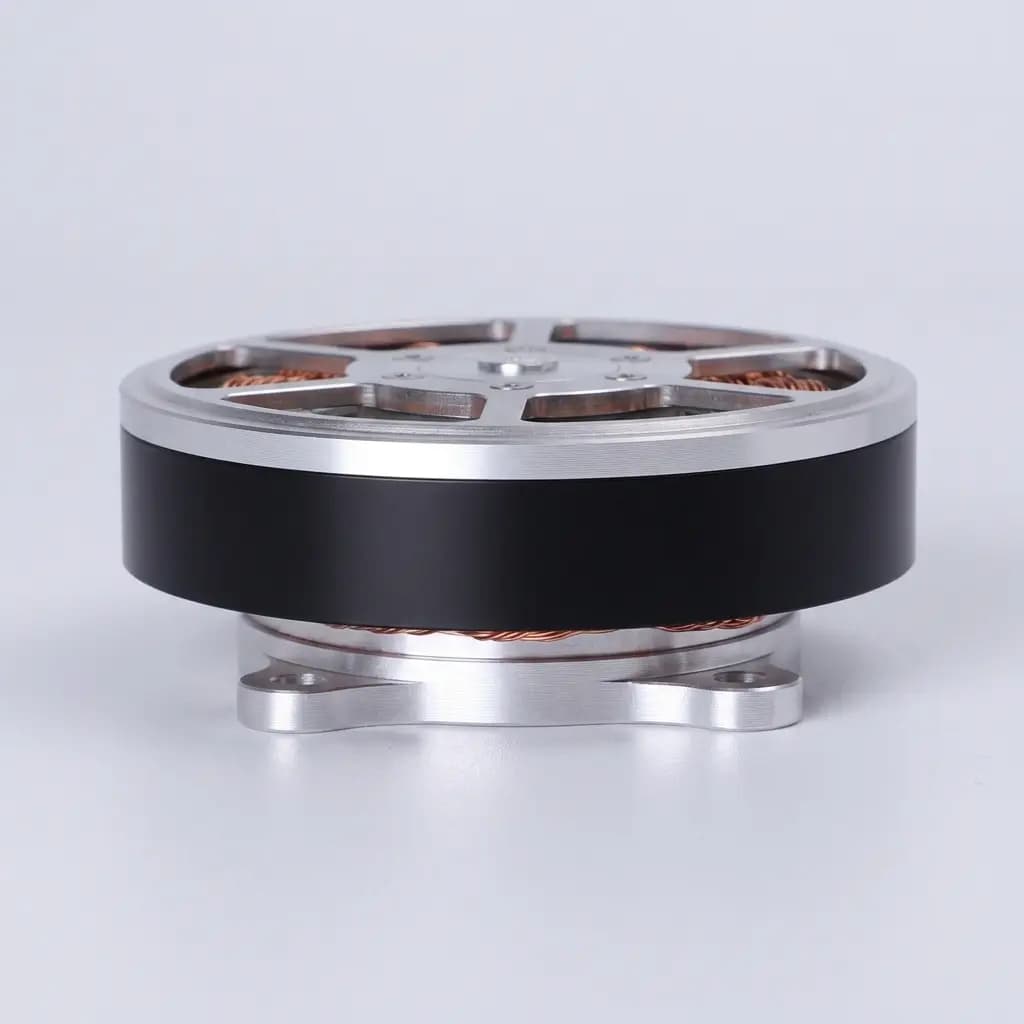
Frameless vs. Framed Motors in Humanoid Robot Joints: A Packaging and Thermal Analysis
An in-depth engineering analysis on why advanced humanoid robot teams migrate from framed servomotors to frameless torque motors for custom joint actuators to optimize space, weight, and thermal dissipation.
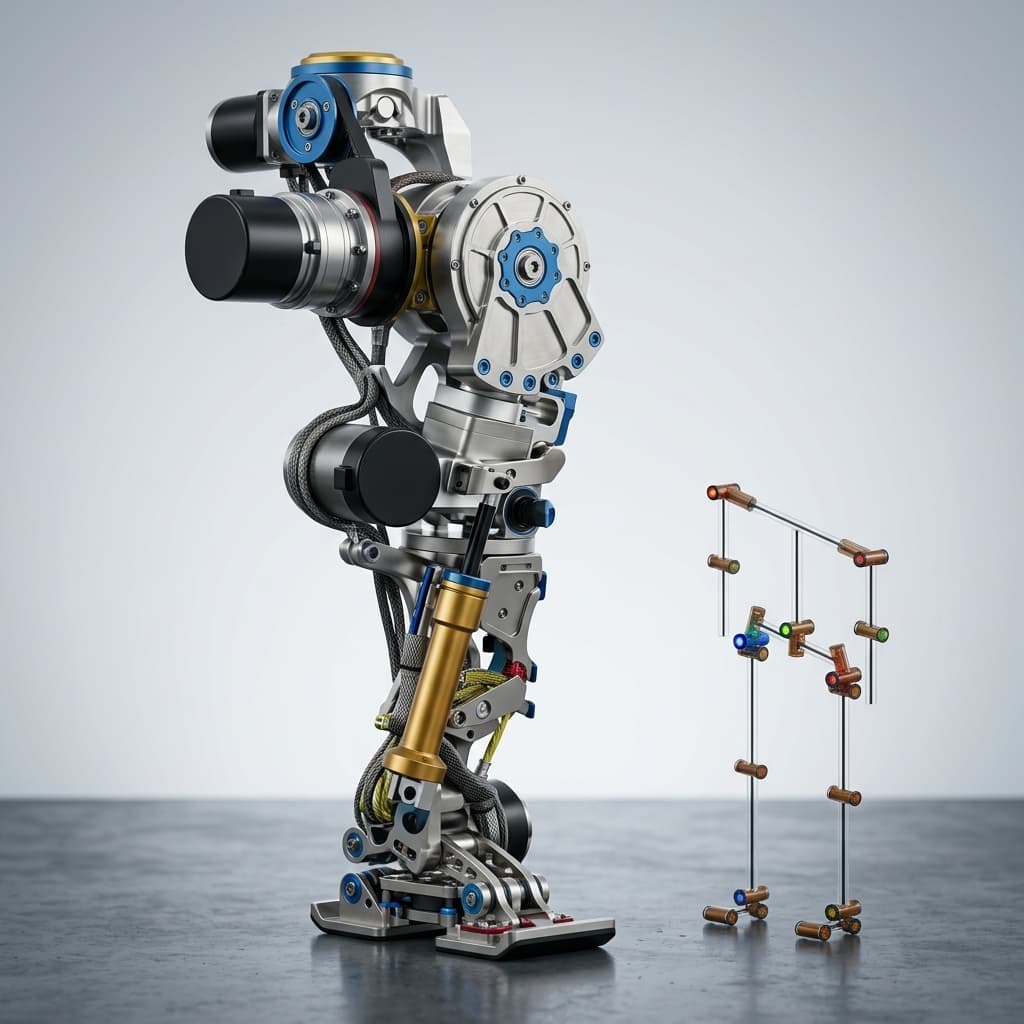
QDD (Quasi-Direct Drive) Actuator Design for Bipedal Humanoid Legs
Overcoming impact shock and backdrivability constraints in bipedal robot legs using Quasi-Direct Drive (QDD) custom actuator architectures.