
Who this fits
For teams choosing QDD because they need torque response and mechanical compliance, but cannot accept an off-the-shelf actuator envelope.
Custom quasi-direct-drive humanoid actuator modules for compliant joints that need high torque density, low reflected inertia, backdrivability, and compact mechanical packaging.
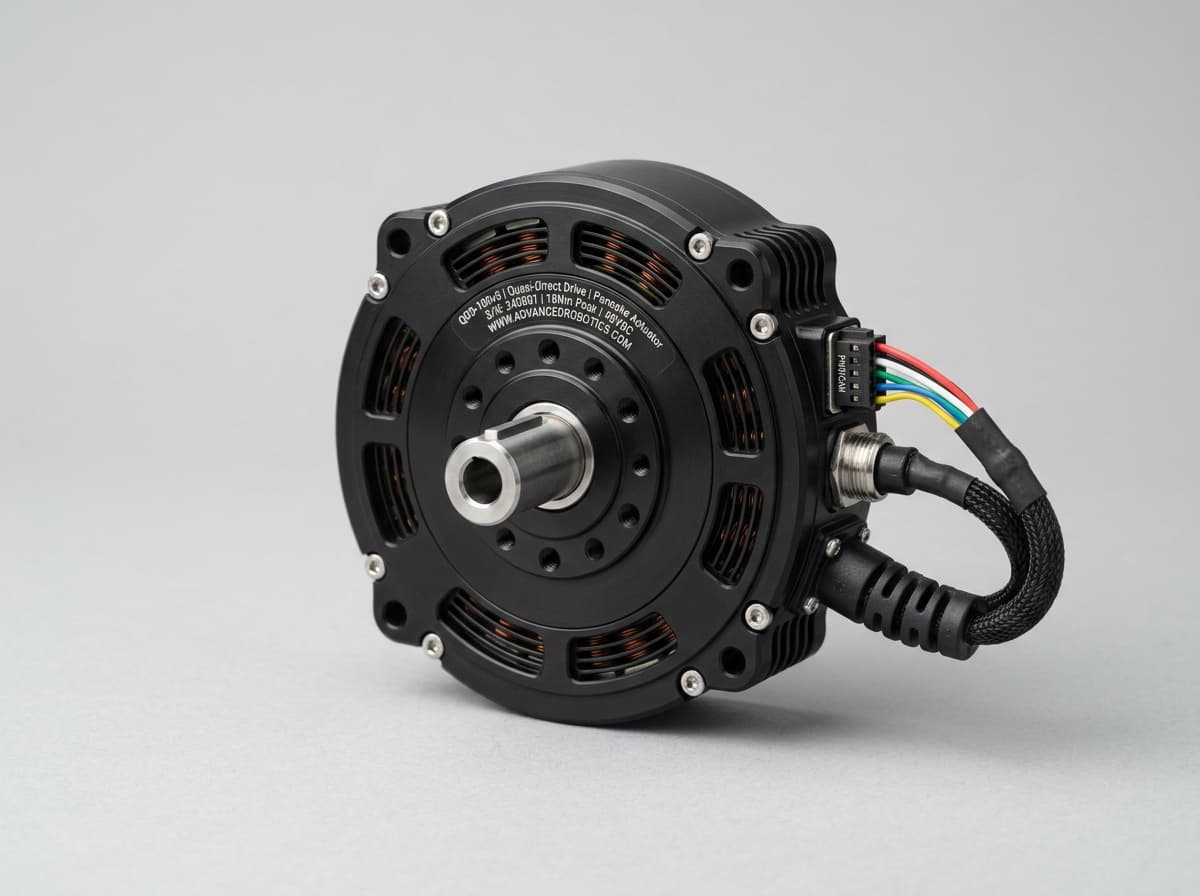
This page should help a robotics buyer decide whether this product family belongs in the RFQ path and what evidence must be attached before a prototype or pilot order is credible.
For teams choosing QDD because they need torque response and mechanical compliance, but cannot accept an off-the-shelf actuator envelope.
Reduction ratio: Low-ratio custom selection
A low-ratio QDD module cannot hold static load without excessive heating
| Metric | Typical Range | Why It Matters |
|---|---|---|
| Reduction ratio | Low-ratio custom selection | The ratio defines torque multiplication, backdrivability, reflected inertia, and control bandwidth. |
| Thermal path | Housing and robot-frame dependent | QDD actuators often push high current in compact space, so heat path must be part of the mechanical design. |
| Encoder topology | Single or dual encoder | Force-control joints need feedback architecture aligned with controller bandwidth and reducer compliance. |
Product selection is only useful when it connects to a buyer-visible evidence path. These proof gates turn the page from a capability description into an RFQ checklist.
| Proof Gate | Evidence to Ask For |
|---|---|
| Drawing baseline | CAD package, controlled drawing revision, CTQ list, open trade-offs, NRE scope, and prototype/pilot responsibility. |
| RFQ evidence package | Buyer-side package with joint map, CAD/drawing baseline, torque-speed or force-stroke targets, validation request, pilot quantity, and report expectations. |
| Evidence library | Stage-by-stage map for CMM, FAI, actuator validation, electronics/FCT, traceability, NCR, packaging, and pilot release records. |
| Test plan checklist | Operating cycle, fixture boundary, torque-speed or force-stroke method, thermal-rise setup, backlash method, FCT, endurance, and report handoff. |
| Sample PO checklist | Drawing revision, CTQ acceptance limits, report deliverables, sample variants, buyer-supplied boundaries, change rules, packaging, and delivery records. |
| Manufacturing proof | FAI, CMM, datum checks, bearing fit, flange flatness, output runout, surface treatment, and outgoing reports. |
| Actuator validation | Torque-speed, thermal rise, backlash, noise, FCT, burn-in, traceability, nonconformance, and pilot release records. |
| BOM and sourcing control | Approved parts, restricted suppliers, substitutions, lead time, firmware boundary, harness, packaging, and second-source risk. |
A serious custom actuator inquiry should show how the selected product family moves from feasibility review into repeatable pilot manufacturing.
Review CAD, joint load, envelope, thermal boundary, cable path, and custom actuator architecture risk.
Build the first sample against defined torque-speed, fit, electrical, mechanical, and inspection assumptions.
Run thermal, backlash, noise, endurance, impact, metrology, and functional checks against the application duty cycle.
Freeze drawing/BOM revisions, evidence package, outgoing inspection, packaging, spare strategy, and repeat-build controls.
This form is prefilled with Custom QDD Humanoid Actuators. Add CAD envelope, torque-speed target, duty cycle, validation needs, quantity, and schedule so the response can start with DFM questions instead of generic sample pricing.
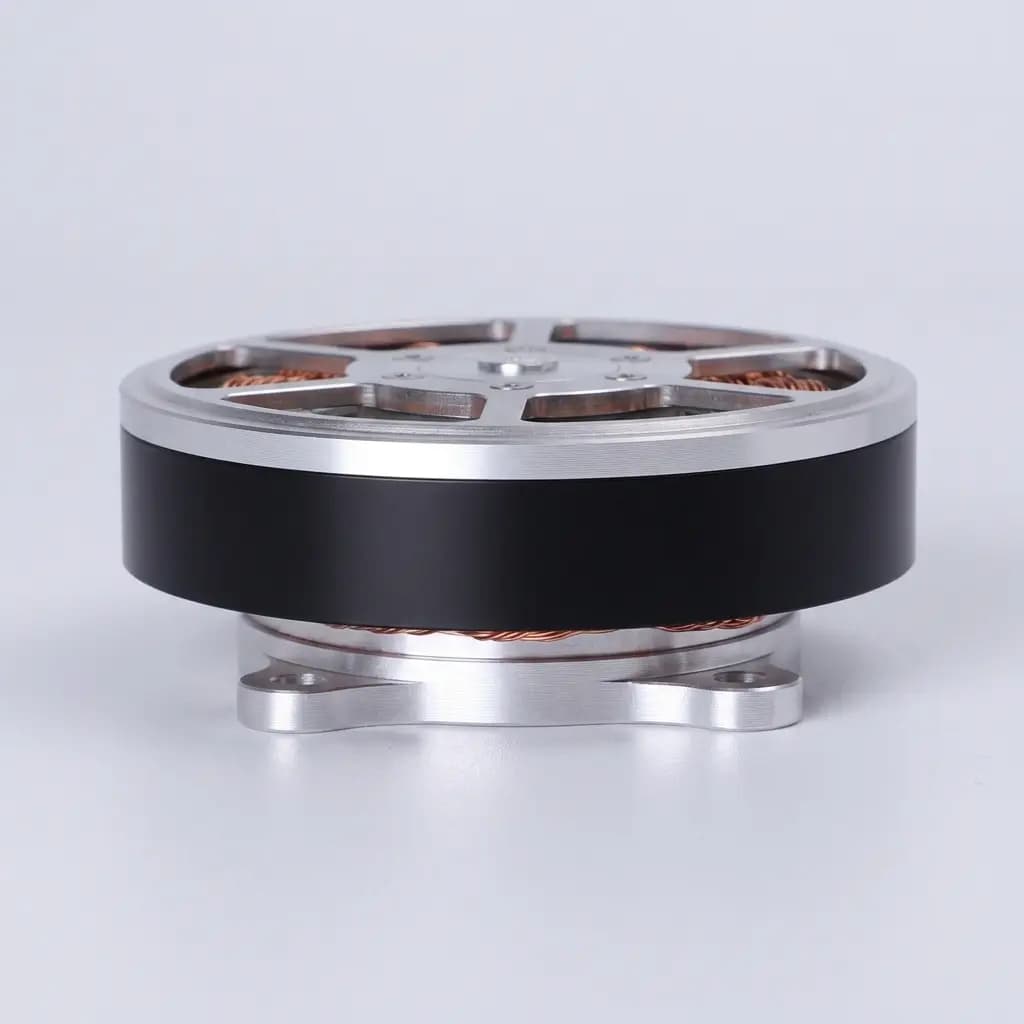
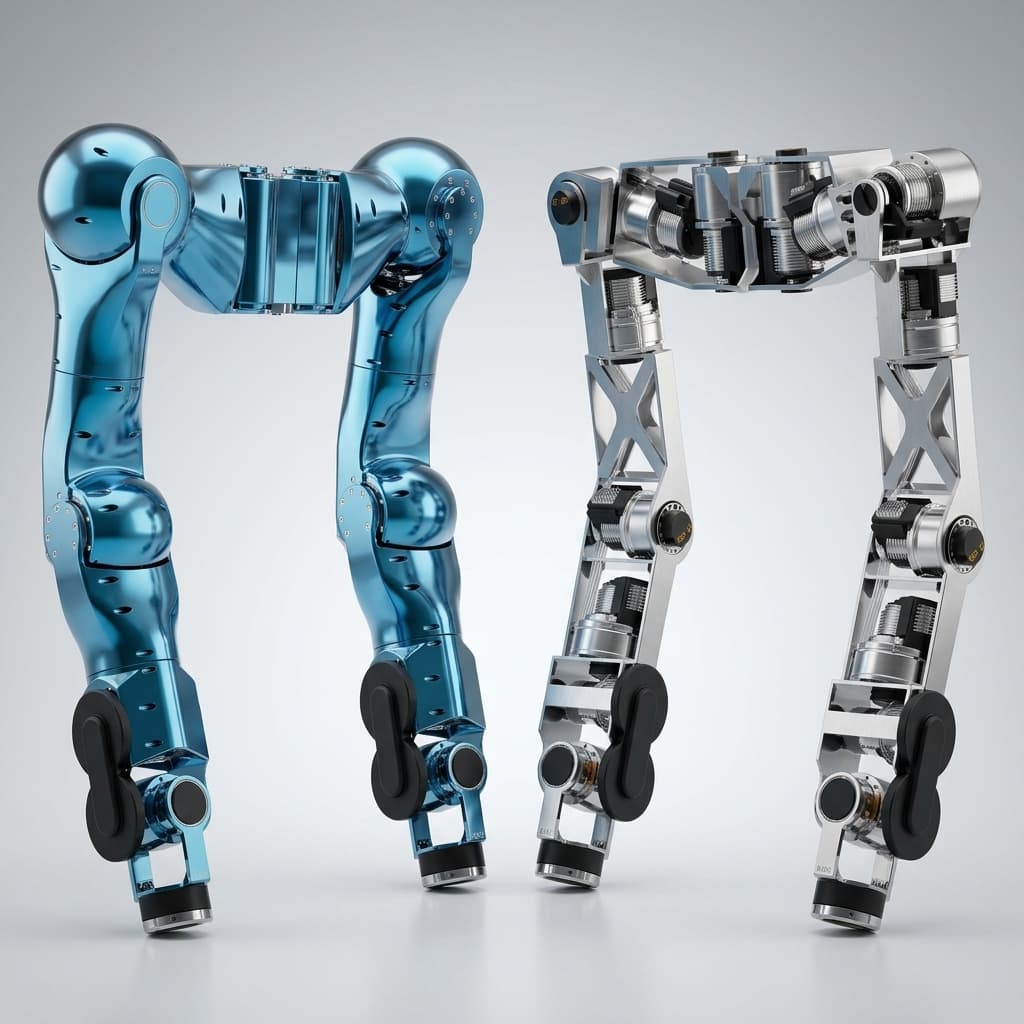
Yes. Custom OD, axial length, flange, hollow shaft, output spline, cable exit, and housing features can be reviewed from CAD.
It depends on thermal and EMC constraints. We can review integrated-driver, external-driver, or stacked-driver layouts during the feasibility stage.
Inquiry Email
Include target torque/speed, quantity, and delivery location.
Application Engineer
+8618857971991
Talk directly about drawings, torque-speed targets, and RFQ data gaps.