
Buyer-Side Package
This is the information your team prepares before asking for a serious ODM quote.
Prepare the CAD, performance targets, validation request, pilot assumptions, and report expectations that let a custom actuator supplier respond with engineering substance instead of generic sample pricing.
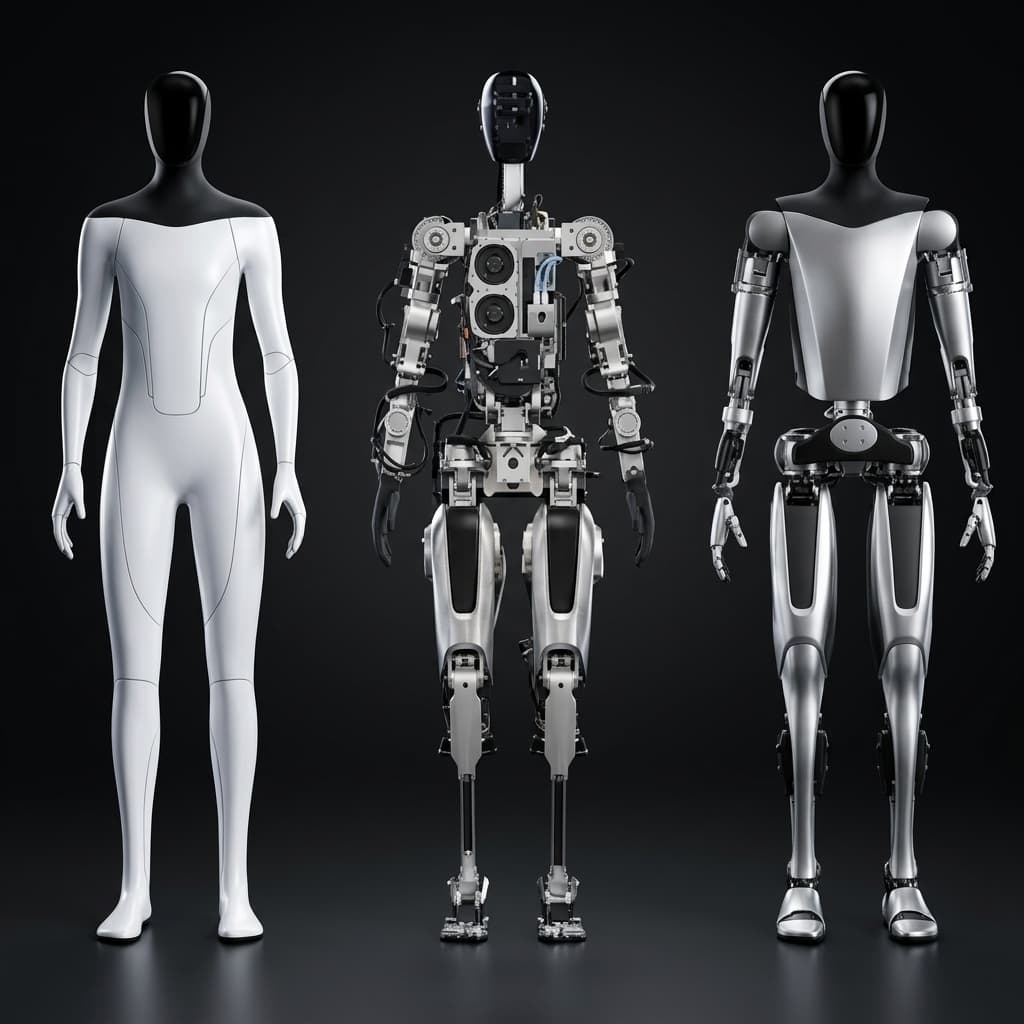
This is the information your team prepares before asking for a serious ODM quote.
The package defines which reports matter before samples, DVT, and pilot release.
Treat this as a checklist. Real reports should be shared only when representative records are available and approved.
Package Contents
The strongest inquiry does not need every value frozen. It does need enough structure to separate fixed requirements from open engineering trade-offs.
| Section | Buyer Sends | Supplier Can Review |
|---|---|---|
| Program cover sheet | Company, role, program stage, funded path, target robot type, decision owner, NDA state, and whether the request is prototype, EVT, DVT, pilot, or production planning. | Buyer fit, response depth, NRE expectation, commercial path, timeline realism, and whether the inquiry is ready for engineering review. |
| Joint map and actuator schedule | Axis name, joint role, quantity per robot, peak and continuous torque or force, target speed, duty cycle, stall event, backlash or lost-motion target, and brake requirement. | Actuator family fit, reducer architecture, motor sizing, thermal risk, bearing load, force-stroke envelope, and which joints need custom validation first. |
| CAD and drawing baseline | STEP or native CAD where available, 2D drawing revision, CTQ dimensions, GD&T notes, datum scheme, material, surface treatment, cable path, and frozen vs open interfaces. | DFM risk, machining path, datum control, CMM/FAI scope, fixture needs, assembly access, cable routing, tolerance stack, and sample release assumptions. |
| Electronics and control boundary | Voltage, protocol, encoder requirement, driver location, brake control, harness route, current limit, firmware boundary, restricted component brands, and preferred substitutions. | PCBA responsibility, thermal path, connector risk, FCT plan, calibration handoff, sourcing constraints, and which electrical evidence belongs in the sample report. |
| Validation and evidence request | Required CMM/FAI, torque-speed, force-stroke, thermal-rise, backlash, load-cycle, burn-in, FCT, traceability, Cpk, 8D, and report-format expectations. | Evidence package depth, test method, fixture capability, pass/fail rules, serial mapping, incoming inspection match, and pilot release gate. |
| Commercial and delivery plan | Prototype quantity, pilot forecast, annual forecast range, target sample date, destination country, Incoterm preference, packaging requirement, spare policy, and shipment urgency. | Quote assumptions, lead-time risk, MOQ, tooling or fixture cost, packaging protection, export document needs, and repeat-order readiness. |
Gate Alignment
Evidence requirements should scale with program risk. A concept screen needs different proof than a pilot release package.
| Gate | Buyer Package | Supplier Output |
|---|---|---|
| Feasibility review | Joint map, package envelope, target torque-speed or force-stroke, thermal boundary, and open constraints. | Architecture direction, DFM questions, sizing risks, missing data list, and whether a prototype path is practical. |
| Sample PO alignment | Controlled drawing revision, CTQ list, acceptance limits, quantity, report requirements, and buyer-owned design boundaries. | Sample scope, NRE assumptions, FAI/CMM scope, preliminary test plan, lead-time risks, and quote direction. |
| EVT / DVT validation | Operating cycle, load cases, thermal condition, backlash method, electronics scope, and required evidence format. | Torque-speed or force-stroke data, thermal-rise record, backlash result, FCT or calibration record, burn-in notes, and open issue log. |
| Pilot release | Frozen drawing and BOM revision, pilot quantity, incoming inspection plan, packaging rule, and traceability depth. | Serial-level records, outgoing inspection summary, yield trend, nonconformance log, packaging record, and corrective-action owner. |
Evidence Pack
These are report categories to align during quotation. They are not a guarantee that every actuator program needs every packet.
| Evidence | Examples | Buyer Decision |
|---|---|---|
| Mechanical report packet | FAI cover sheet, CMM output, CTQ map, datum notes, material lot, heat-treatment or surface-treatment record. | Can the housing, shaft, flange, bearing seat, cover, or interface repeat against the drawing baseline? |
| Actuator performance packet | Torque-speed curve, force-stroke curve, thermal-rise condition, backlash or lost-motion method, no-load current, noise, vibration, and load-cycle notes. | Does the assembled actuator meet the real joint duty cycle, not only a catalog peak value? |
| Electronics packet | Gerber or stackup revision, SPI/AOI scope, X-Ray report where needed, FCT fixture ID, current-limit result, calibration note, and firmware boundary. | Are compact drivers, sensors, connectors, and calibration steps controlled enough for sample sign-off? |
| Pilot traceability packet | Serial number, lot binding, fixture ID, calibration revision, station record where available, yield summary, NCR log, and 8D owner. | Can a working sample become a controlled pilot batch with repeatable evidence? |
Email Brief
Use a compact structure so engineering, procurement, and supplier teams can see the same baseline.
Subject: RFQ - Custom humanoid actuator package for [joint / robot program]

Program stage: [Prototype / EVT / DVT / pilot]
Joint map: [axis, quantity per robot, left/right variants]
Performance target: [peak and continuous torque or force, speed, duty cycle]
Package limits: [OD, length, flange, shaft, hollow-bore, cable path]
Electrical boundary: [voltage, protocol, encoder, brake, driver, harness]
Validation needed: [FAI/CMM, thermal, backlash, FCT, burn-in, traceability]
Commercial scope: [sample quantity, pilot forecast, destination, target date]
Attachments: [CAD, drawings, BOM, test data, internal acceptance checklist]
RFQ Red Flags
| Gap | Exact Fix |
|---|---|
| Peak value only | Add continuous torque or force, duty cycle, ambient condition, cooling path, and allowable surface temperature. |
| No drawing revision | Name the CAD and 2D drawing revision, mark frozen features, and list which interfaces are still open. |
| Backlash target without method | Define load condition, reversal method, measurement location, thermal state, and post-cycle expectation. |
| Validation requested too late | List CMM/FAI, thermal-rise, torque-speed, FCT, burn-in, and traceability needs before sample PO. |
| Pilot forecast missing | Send prototype quantity, pilot quantity, annual forecast range, target date, and destination country. |
Send the baseline and mark any missing items as TBD. The first useful reply should identify DFM questions, evidence scope, and whether the request is ready for quote direction.
No. This page is a buyer-side sample RFQ package and evidence checklist. Real CMM, FAI, FCT, burn-in, torque-speed, or traceability records should be attached only when representative program records are available and approved for sharing.
Yes. Mark missing values clearly. The first response can still return DFM questions, sizing risks, and the exact data needed before a formal quote direction.
For most custom humanoid actuator programs, the pilot gate should at least define drawing revision, CTQ/FAI or CMM scope, actuator performance test method, thermal or backlash evidence where relevant, serial traceability, packaging rule, and nonconformance ownership.
Inquiry Email
Include target torque/speed, quantity, and delivery location.
Application Engineer
WhatsApp Engineering Support
Talk directly about drawings, torque-speed targets, and RFQ data gaps.