
Why This Checklist Exists
Backlash is not a useful acceptance number until both sides agree what is being measured, where it is measured, under what load, and whether the limit applies before or after cycling.
Define backlash acceptance for custom humanoid actuators with clear measurement boundary, reversal load, output location, thermal state, post-cycle limit, and batch sampling rules.
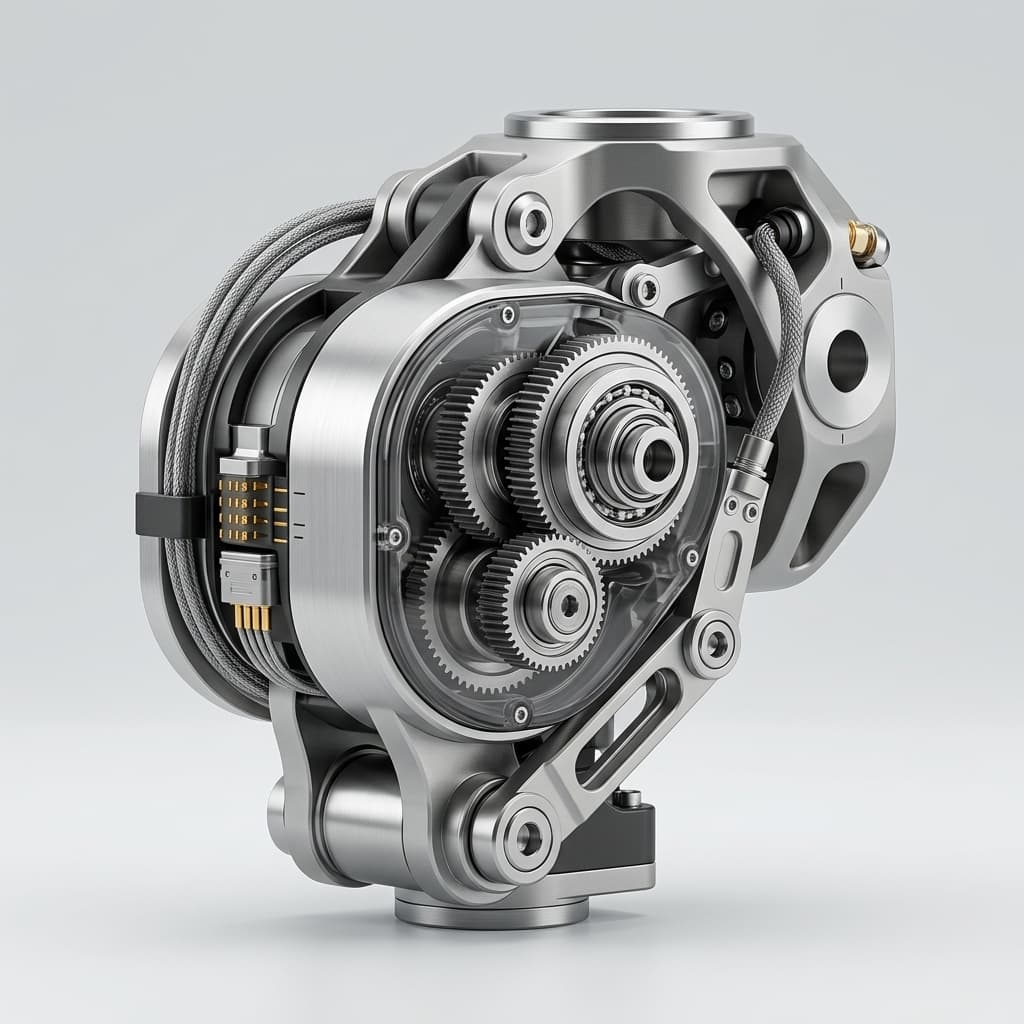
Backlash is not a useful acceptance number until both sides agree what is being measured, where it is measured, under what load, and whether the limit applies before or after cycling.
Checklist
The goal is to make acceptance measurable before the quote, PO, sample, or pilot gate creates pressure to accept incomplete proof.
| Area | Buyer Question | Define Before Review | Evidence / Output | Red Flag |
|---|---|---|---|---|
| Unit under test | Is the claim for a reducer, a motor-reducer stack, or the complete actuator module? | Included parts, excluded robot structure, output member, housing, bearing support, encoder location, and assembly state. | Boundary diagram, sample serial, drawing revision, and excluded-component note. | Reducer-only backlash is accepted as final actuator-joint backlash. |
| Measurement location | Where is angular motion measured relative to the robot interface? | Output flange, shaft, link interface, encoder location, lever arm if used, sensor resolution, and fixture stiffness. | Measurement location note, sensor specification, fixture ID, and setup image or drawing when available. | The report lists arc-minutes without saying whether measurement is at the reducer, output, or robot link. |
| Reversal load | What torque or force is used when the direction reverses? | Preload torque, reversal torque, load duration, speed, dwell, brake state, controller mode, and whether the test is no-load or loaded. | Reversal method, torque value, loading fixture, and sequence definition. | The supplier says "low backlash" but cannot define the torque condition. |
| Thermal and run-in state | Is backlash measured cold, hot, before run-in, or after cycling? | Ambient temperature, actuator temperature, lubrication state, run-in cycle, load-cycle history, and rest period. | Temperature note, cycle state, test timing, and pre/post comparison where relevant. | A cold first-sample value is used for a joint that operates hot or after sustained load cycling. |
| Data reduction | Which part of the hysteresis or reversal curve becomes the acceptance number? | Zero-crossing rule, torque threshold, filtering, repeat count, averaging rule, outlier handling, and rounding. | Raw or summarized curve, calculation rule, repeated values, and final acceptance number. | The result is a single number with no calculation method or repeatability note. |
| Acceptance limit | Does the limit apply at sample arrival, after EVT, after DVT, or during pilot sampling? | Initial limit, post-cycle limit, allowable drift, repair or rework rule, and decision gate. | Acceptance matrix with gate-specific backlash limits and actions when limits fail. | The team agrees a first-sample target but not the limit after endurance testing. |
| Batch sampling | How many units need backlash measurement before pilot release? | Sample size, serial coverage, critical joint priority, measurement frequency, and lot traceability. | Sampling plan, serial-level result table, lot ID, and outgoing inspection record. | Only the best sample is measured and used as the pilot expectation. |
Decide whether the acceptance number refers to reducer gear lash, assembled actuator lost motion, output flange movement, or full robot-link movement.
Choose no-load, preload, or loaded reversal based on the joint risk. High-torque leg joints usually need a more explicit load condition than small upper-limb axes.
Keep fixture, output point, encoder source, and calculation rule consistent between sample, DVT, and pilot sampling.
A useful method defines both initial backlash and post-cycle acceptance so endurance testing cannot hide mechanical degradation.
Gate Review
| Gate | Pass Signal | Fail Signal | Next Action |
|---|---|---|---|
| Feasibility target | The buyer states whether the target is reducer-level or assembled-joint-level. | The RFQ asks for a backlash value without a measurement boundary. | Add unit-under-test, output location, and load condition to the RFQ baseline. |
| Sample acceptance | The sample report states method, temperature, fixture, repeated results, and acceptance limit. | A single "pass" value is reported without setup context. | Request the test setup and repeatability note before approving the sample. |
| DVT post-cycle | Backlash is compared before and after the agreed load-cycle or run-in condition. | DVT focuses on torque while backlash drift remains unmeasured. | Add post-cycle backlash measurement to the DVT closure packet. |
| Pilot sampling | Serial-level backlash data is sampled against a lot and drawing revision. | Only the engineering sample is measured, with no pilot sampling rule. | Define sampling size and outgoing inspection ownership before pilot release. |
Proof Boundary
Not by itself. Lower backlash can help precision, but the actuator still needs the right stiffness, shock tolerance, thermal behavior, controllability, noise, lifetime, and manufacturing repeatability for the joint.
It can be a first feasibility clue, but it should not be the final acceptance value for an assembled actuator. The buyer should ask how backlash is measured at the final output boundary.
Measure it after the load-cycle, run-in, or endurance condition that best represents the robot risk. The post-cycle limit should be defined before DVT starts, not after the result is inconvenient.
Send the drawing baseline, joint role, performance target, and current gate. Mark unknowns clearly so the first review can separate feasible assumptions from missing acceptance data.
Inquiry Email
Include target torque/speed, quantity, and delivery location.
Application Engineer
+8618857971991
Talk directly about drawings, torque-speed targets, and RFQ data gaps.