
Why This Checklist Exists
A working actuator sample is not the same as pilot readiness. This checklist helps buyers review whether the build, evidence, and change-control system can repeat before larger orders begin.
Check whether a custom humanoid actuator program is ready for pilot production, including revision freeze, inspection plan, serial traceability, yield review, NCR handling, packaging, and change control.
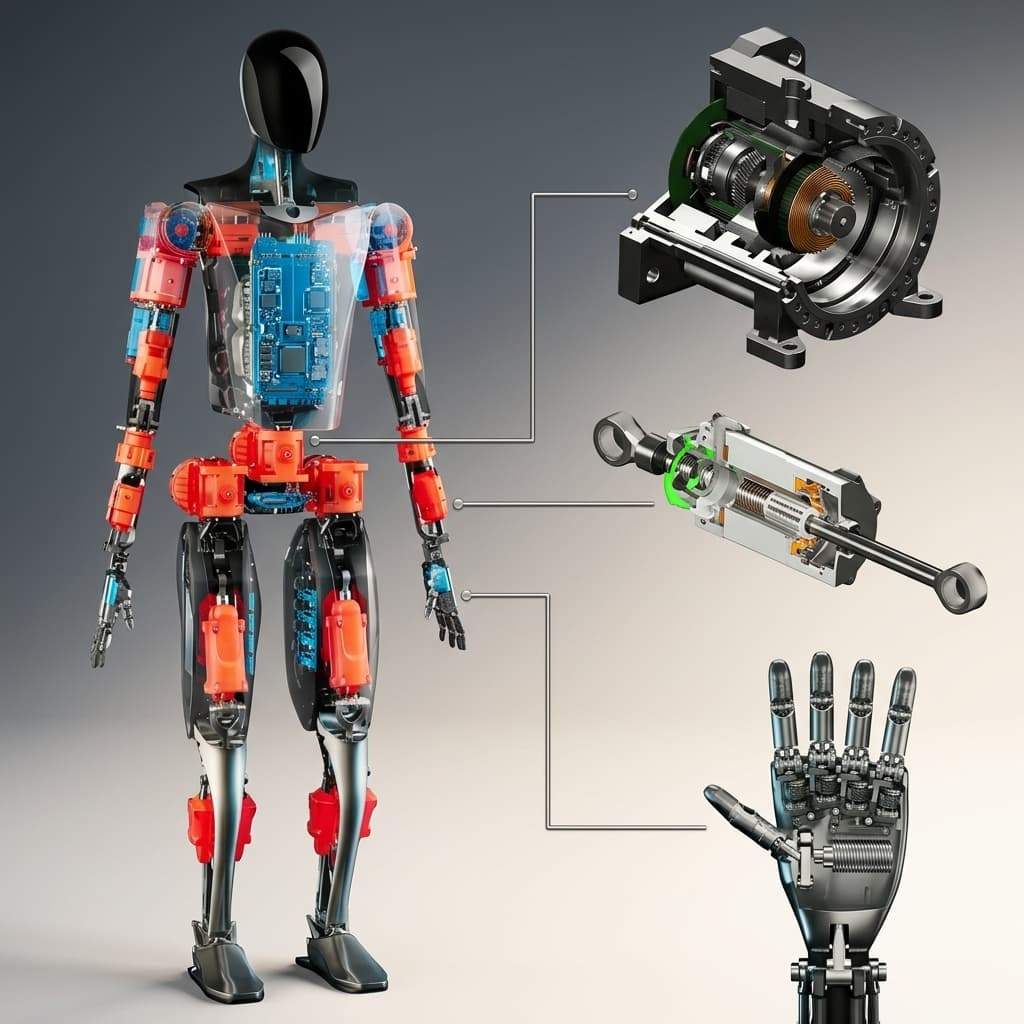
A working actuator sample is not the same as pilot readiness. This checklist helps buyers review whether the build, evidence, and change-control system can repeat before larger orders begin.
Checklist
The goal is to make acceptance measurable before the quote, PO, sample, or pilot gate creates pressure to accept incomplete proof.
| Area | Buyer Question | Define Before Review | Evidence / Output | Red Flag |
|---|---|---|---|---|
| Revision freeze | Is the pilot batch tied to a single controlled design baseline? | Drawing revision, CAD revision, BOM revision, firmware or calibration revision, approved deviations, and pending ECOs. | Pilot release baseline, deviation list, and change owner. | Pilot parts are ordered while drawings, BOM, or firmware are still changing informally. |
| Pilot BOM readiness | Are critical components approved for repeat purchase? | Motor, reducer, encoder, driver, brake, bearings, harness, connector, material, surface treatment, supplier restrictions, and approved alternates. | Approved pilot BOM, substitution rule, lead-time risk list, and buyer-controlled part boundary. | Samples used parts that cannot be sourced repeatably or are undocumented substitutions. |
| Process and fixture control | Can the build process repeat the sample result? | Machining route, assembly steps, preload method, adhesive or fastener rule, torque tools, fixtures, calibration equipment, and station checks. | Process flow, fixture list, calibration state, and critical operation controls. | Pilot units rely on manual tuning that is not captured as a controlled process. |
| Inspection plan | Which incoming, in-process, and outgoing checks protect pilot risk? | CTQ dimensions, CMM/FAI scope, bearing fits, runout, backlash, torque-speed or force-stroke, FCT, burn-in, and packaging inspection. | Pilot inspection plan, sampling rule, acceptance limits, and report format. | Inspection is copied from prototype work without pilot sampling or incoming quality needs. |
| Serial traceability | Can each unit be traced back to build and test evidence? | Serial marking, lot ID, drawing and BOM revision, fixture ID, calibration revision, key component lots, station record, and report binding. | Serial-level traveler or summary table for buyer incoming quality. | Pilot records exist, but they are not tied to specific actuator serials. |
| Yield and NCR control | Does the team know what failed, why, and who owns closure? | Pilot yield target, failure categories, rework rule, scrap rule, NCR owner, 8D requirement, and buyer escalation path. | Yield summary, nonconformance log, corrective action owner, and open issue status. | Failures are discussed informally and disappear before the next pilot lot. |
| Packaging and export handoff | Will pilot units arrive without damage and with usable documents? | Protective packaging, interface covers, ESD needs, labels, serial list, destination, Incoterm, spare policy, and incoming inspection documents. | Packing record, shipment document packet, serial list, and buyer receiving checklist. | Precision interfaces, encoders, or connectors are exposed during shipment. |
| Pilot-to-production handoff | What must close before repeat orders or tooling scale-up? | Open engineering changes, tooling or fixture improvements, supplier risk, test-plan changes, yield actions, cost changes, and approval owner. | Pilot closure report, production action list, and release decision. | The next order is placed before sample and pilot lessons are converted into controlled actions. |
Lock the drawing, BOM, firmware, calibration, fixture, and deviation status before judging whether the batch can repeat.
Use enough pilot units to expose process variation, not just enough to produce a working demo set.
A pilot run should show serial traceability, inspection coverage, yield behavior, NCR ownership, and packaging readiness.
Convert pilot lessons into ECOs, fixture updates, supplier controls, or revised acceptance limits before larger orders begin.
Gate Review
| Gate | Pass Signal | Fail Signal | Next Action |
|---|---|---|---|
| Pilot release review | Design baseline, BOM, inspection plan, fixture state, and sample lessons are visible. | The team uses prototype success as the only pilot justification. | Create a pilot release checklist with owners for every open design or process item. |
| First pilot lot | Serial-level records connect each unit to inspection, test, and packaging evidence. | Reports are generated but cannot be matched to actuator serials. | Bind outgoing evidence to serials before the shipment is accepted. |
| Pilot issue closure | Yield, NCR, rework, and corrective actions are reviewed with buyer and supplier owners. | Problems are fixed locally but not captured for repeat build control. | Close or explicitly carry each issue into the next lot with owner and date. |
| Production decision | The team knows which process controls, evidence packets, and supplier risks will scale. | Repeat orders begin with unresolved design or process ambiguity. | Hold scale-up until the pilot closure report defines the production baseline. |
Proof Boundary
There is no universal count. The number should expose the highest-risk variation in the design and process: critical dimensions, reducer assembly, thermal behavior, electronics, harness routing, packaging, and supplier repeatability.
Usually no. EVT success can prove a concept, but pilot readiness also needs revision control, BOM stability, repeatable process steps, inspection coverage, serial traceability, packaging, and issue-closure discipline.
Review yield, NCRs, rework, field or bench feedback, drawing or BOM changes, fixture updates, supplier substitutions, packaging damage, and any test limits that changed after the first lot.
Send the drawing baseline, joint role, performance target, and current gate. Mark unknowns clearly so the first review can separate feasible assumptions from missing acceptance data.
Inquiry Email
Include target torque/speed, quantity, and delivery location.
Application Engineer
+8618857971991
Talk directly about drawings, torque-speed targets, and RFQ data gaps.