
Fundamentally the Same Tech
Both sit in the permanent-magnet brushless motor family. The report compares package architecture, not an electrical category split. Evidence: TI BLDC/PMSM drive guide, 2015-05.
For humanoid robot actuators, the practical choice is usually not brushless versus non-brushless. It is a packaging and integration decision between a housed high-speed BLDC/PMSM motor and a frameless torque motor kit designed into the joint structure.
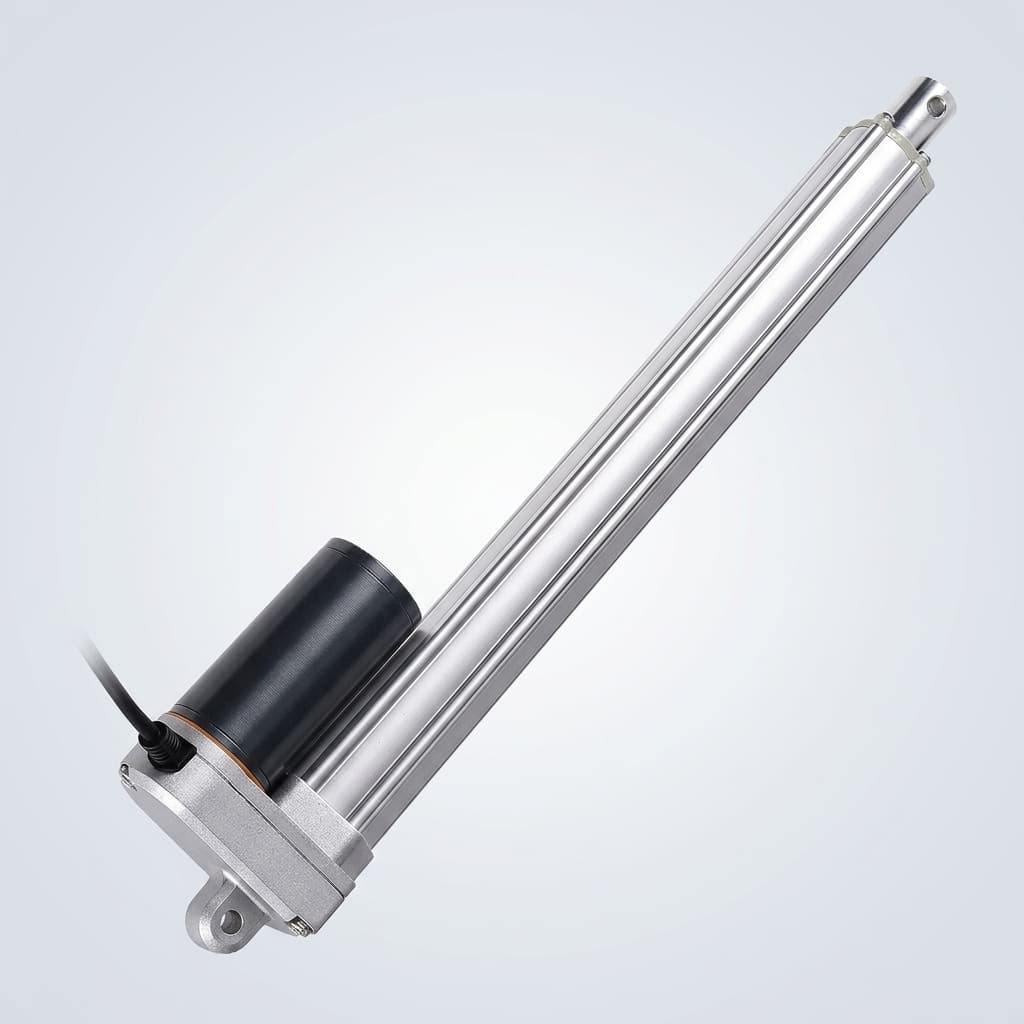
This report compares housed brushless servo motors against frameless torque motor kits for humanoid joint modules. It does not claim that torque motors are a separate electrical motor family. Public apples-to-apples joint-level Nm/kg benchmarks are limited, so torque density claims below are tied to their source boundary: standalone motor, motor kit, actuator module, or complete thermal assembly.
Both sit in the permanent-magnet brushless motor family. The report compares package architecture, not an electrical category split. Evidence: TI BLDC/PMSM drive guide, 2015-05.
Low-ratio, proprioceptive actuator research favors compact custom motor integration over generic housed motors. Evidence: MIT Cheetah 2016 and Cheetah 3 2019 actuator papers.
Frameless kits remove supplier-provided housing and bearings, so the joint team owns alignment, bearings, heat path and inspection. Evidence: Kollmorgen frameless mounting guidance.
In the context of industrial automation, "brushless motor" and "torque motor" often refer to packaged servo motors and massive direct-drive rotary tables, respectively. However, in humanoid robot development, the definitions narrow significantly:
| Category | Standard Brushless Motor (Housed) | Frameless Torque Motor |
|---|---|---|
| Architecture | Inner rotor or compact servo package, typically delivered with self-contained housing, shaft support and bearings. | Inner or outer rotor architecture, often selected for higher low-speed torque and supplied as unhoused rotor and stator kits. |
| Performance Target | Higher motor speed with torque multiplied later by the reducer. | Higher usable torque at low to moderate joint speeds, with lower reducer ratios where force control matters. |
| Humanoid Use Case | High-ratio geared joints where compact packaging is less constrained or fast prototyping matters more than joint mass. | Quasi-Direct Drive (QDD) actuators or compact, high-torque integrated joints. |
The move toward frameless or highly integrated motor designs is driven by package mass, reducer ratio, thermal path and cable routing constraints. The public evidence is strongest in high-dynamic legged-robot actuator papers and vendor frameless motor documentation; humanoid supplier data still needs project-specific RFQ confirmation.
A housed brushless motor includes casing, shaft support and connection features that may duplicate the joint structure. Frameless kits let the actuator housing carry those functions, but only if the structure is designed and inspected for them.
Many humanoid shoulders, hips, wrists and ankles need power, data or cooling paths through the rotation axis. Frameless motor kits can be selected around larger bores, while housed motors often force the routing around an existing shaft package.
Low-ratio actuators reduce reflected inertia and make motor-current force estimation more usable. The motor choice should be validated with measured cogging, torque ripple and reducer friction data rather than pole count alone.
A frameless stator can reject heat into the actuator housing, but catalog torque is only meaningful when the supplier thermal boundary matches the real joint heat path.
Torque density is useful only when the mass boundary is identical. A standalone motor number, a rotor-stator kit number, and a complete actuator-module number answer different sourcing questions.
| Evidence Boundary | What the Source Supports | Source and Date | Decision Use |
|---|---|---|---|
| Standalone custom legged-robot motor | About 27 Nm/kg saturation torque density and a 5.8:1 reduction are reported for the MIT Cheetah leg actuator motor architecture. | MIT Cheetah proprioceptive actuator paper, 2016 | Directional evidence for QDD motor sizing; not a full humanoid joint module benchmark. |
| Integrated proprioceptive actuator architecture | Cheetah 3 used custom high-torque-density motors with single-stage 7.67:1 planetary reductions. | Cheetah 3 actuation paper, 2019 | Supports the low-ratio actuator direction; quadruped evidence must be translated carefully to humanoid load cases. |
| Commercial frameless motor kit | Catalog continuous and peak torque depend on frame stack, winding, winding temperature rise, ambient temperature, housing and heat-sink assumptions. | Kollmorgen TBM2G selection guide, 2024-02 | Compare candidate motors only after matching the exact thermal and mass boundary. |
| Housed BLDC or servo package | Public benchmarks rarely isolate motor, reducer, encoder, coupling and housing mass consistently across suppliers. | Evidence gap, RFQ required | Request complete motor-plus-reducer-plus-encoder mass and measured continuous joint torque before ranking suppliers. |
Quasi-Direct Drive (QDD) actuators bridge the gap between high-ratio geared motors and pure direct-drive. The underlying motor usually needs high low-speed torque, low torque ripple and a drive that can control the selected winding accurately. Pole count is one input, not a standalone selection rule.
A critical engineering pitfall in selecting frameless torque motors is treating catalog continuous torque as a universal value. Vendor selection guides usually define the winding, ambient and mounting boundary used for the rating.
| Thermal Question | What to Verify | Procurement Action |
|---|---|---|
| Datasheet boundary | Ambient temperature, winding temperature rise, mounting plate, heat sink, housing material and sensor placement. | Require the supplier to state the exact boundary behind continuous torque, not only peak torque. |
| Joint boundary | Plastic covers, cable fill, reducer heat, brake or encoder heat, airflow and actuator wall thickness. | Run a heat-soak test at target duty cycle with the real housing or a thermally equivalent fixture. |
| Derating decision | Measured continuous torque after temperature stabilization, not only a short peak-torque burst. | Ask for torque-speed curves after heat soak and define the allowable winding or case temperature in the RFQ. |
Send the joint envelope, target torque-speed curve, voltage, cooling boundary and reducer assumption before ranking motor quotes. That keeps brushless motor vs torque motor decisions tied to the actual humanoid joint, not catalog labels.
| Actuator Design Approach | Recommended Motor Type | Why (Constraints & Rules) |
|---|---|---|
| Quasi-Direct Drive (QDD) | Frameless Torque Motor | Usually benefits from high low-speed torque so the reducer ratio can stay low. A housed motor is viable only if its measured torque-speed curve and package mass meet the joint target. |
| High-Ratio Harmonic or Planetary | Frameless or Housed BLDC | The reducer multiplies torque so significantly that a smaller, faster motor is sufficient. |
| Rapid Lab Prototype | Housed BLDC (Servo Kit) | Frameless torque motors require supplier-defined air gap, concentricity and runout control. If you cannot machine and inspect that stack, use a pre-housed motor. |
Specifying a frameless torque motor shifts the burden of quality control from the motor supplier to the joint assembly factory.
Yes. In this page, torque motor means a frameless PMSM or BLDC motor kit optimized for low-speed torque and direct mechanical integration.
It can be acceptable for early prototypes, high-ratio joints, external packages, or designs where the extra housing, shaft and bearings do not break the mass or routing budget.
For low-ratio, backdrivable QDD joints, shortlist frameless torque motors first, then validate the exact winding, reducer, encoder and heat path with dyno and thermal tests.
No. Higher pole count can support low-speed torque goals, but it also affects drive frequency, control tuning, losses and cost. Compare measured torque-speed and cogging data.
Ask for continuous and peak torque-speed curves, winding temperature method, mass boundary, winding options, rotor and stator dimensions, mounting tolerances, encoder assumptions and reducer assumptions.
Only if the mass boundary is identical. Motor-only, motor-plus-housing, actuator module and actuator-with-thermal-plate values are different claims.
For production, an integrated actuator module can reduce assembly risk if the team lacks validated alignment fixtures, bearing stack control and end-of-line dyno testing.
The drive must support field-oriented control, the required current and voltage, and the selected encoder feedback. Hobby-style ESC assumptions are usually too weak for force-controlled joints.
Use a purpose-built fixture with bearing support, alignment control and a representative thermal path. A bare rotor and stator kit is not a valid joint-level test.
It is a selection gate. Catalog continuous torque depends on mounting and cooling assumptions, so the final joint needs heat-soak testing at the target duty cycle.
It is only suitable for fit checks or very light proof-of-concept work unless the supplier approves the material and load case. Production joints need stable, inspectable structure.
The critical tolerance is model-specific rotor-stator air gap control, including concentricity and runout under load and temperature. Request the supplier drawing before committing.
Evidence strength is highest for motor physics, frameless kit definitions, mounting requirements and legged-robot actuator architecture. It is weaker for public humanoid-specific supplier comparisons, so this page turns those gaps into RFQ checks instead of inventing universal rankings.
| Source | Date | Evidence Tier | Supports |
|---|---|---|---|
| Texas Instruments BLDC/PMSM motor drive guide | 2015-05 | Tier 1 vendor application guide | BLDC and brushless AC/PMSM motors are handled as adjacent permanent-magnet motor-control classes in industrial and robotics drives. |
| MIT Cheetah proprioceptive actuator paper | 2016 | Tier 1 research paper | High torque density, low gear ratio and backdrivability are linked design goals for dynamic legged actuators; the paper reports about 27 Nm/kg standalone motor saturation torque density and a 5.8:1 gear ratio in its Cheetah leg module. |
| Cheetah 3 robot actuation paper | 2019 | Tier 1 research paper | Cheetah 3 used custom high-torque-density electric motors with single-stage 7.67:1 planetary reductions for proprioceptive ground-force control. |
| Kollmorgen frameless motor overview | accessed 2026-07-26 | Tier 1 vendor documentation | Frameless motors are wound stator and permanent-magnet rotor kits without housing, endbells, bearings, output shaft, connectors, feedback device or brake. |
| Kollmorgen TBM2G selection guide | 2024-02 | Tier 1 vendor selection guide | Catalog torque, mass and thermal ratings are model-specific and tied to winding temperature rise, ambient temperature, housing and heat-sink assumptions. |
| Kollmorgen frameless mounting guidelines | accessed 2026-07-26 | Tier 1 vendor installation guide | The user-supplied bearing system must keep a rigid, uniform rotor-stator clearance gap and follow model-specific concentricity requirements. |
Evidence gap: no public, supplier-neutral benchmark was found that compares complete humanoid joint modules with the same mass, thermal, reducer, encoder and duty-cycle boundary. Treat supplier Nm/kg claims as RFQ inputs until verified on a joint dyno.
Shortlist low-ratio actuator modules when backdrivability and torque response are binding constraints.
Review cable-through and hollow-bore packaging trade-offs before freezing the motor envelope.
Compare motor, reducer, encoder, driver, housing and validation scope as one module-level RFQ.
Move from CAD envelope and torque target to manufacturable prototype and pilot hardware.
Coordinate motor, reducer, encoder, brake, bearing, housing, harness and export assumptions.
Use a supplier-ready RFQ structure for torque-speed, thermal, mass and tolerance data.
Go deeper on housing mass, cable routing, thermal path and integration ownership.
Attach supplier claims, test reports and validation artifacts to a traceable decision record.
Inquiry Email
Include target torque/speed, quantity, and delivery location.
Application Engineer
WhatsApp Engineering Support
Talk directly about drawings, torque-speed targets, and RFQ data gaps.